For product designers trusted to deliver—but too often left out of the decisions.
You can deliver good design and still be brought in after the important choices are made. ListenIn Labs explores the psychological and organisational patterns behind that gap—and helps you practise a different response.
Stefan Vilar Markiewicz
I am a product design leader with a master’s in psychology.
The publication
Every two weeks: a familiar workplace situation, a clearer way to understand it, and one practical experiment to try.
./situations
01
You receive a solution-shaped brief and struggle to reopen the problem.
02
You recognise a weak assumption but hesitate to challenge it.
03
Your recommendation is discussed as a visual preference rather than a product decision.
./field-notes
THE DECISIONS · 05 APR 2026
You shipped 47 screens last quarter. Your colleague shipped 12. Your colleague got the promotion. This issue is about the fallacy that keeps talented designers trapped in the high-effort, low-leverage quadrant — and the matrix that shows you where the real value lives.
THE CONVERSATIONS · 22 MAR 2026
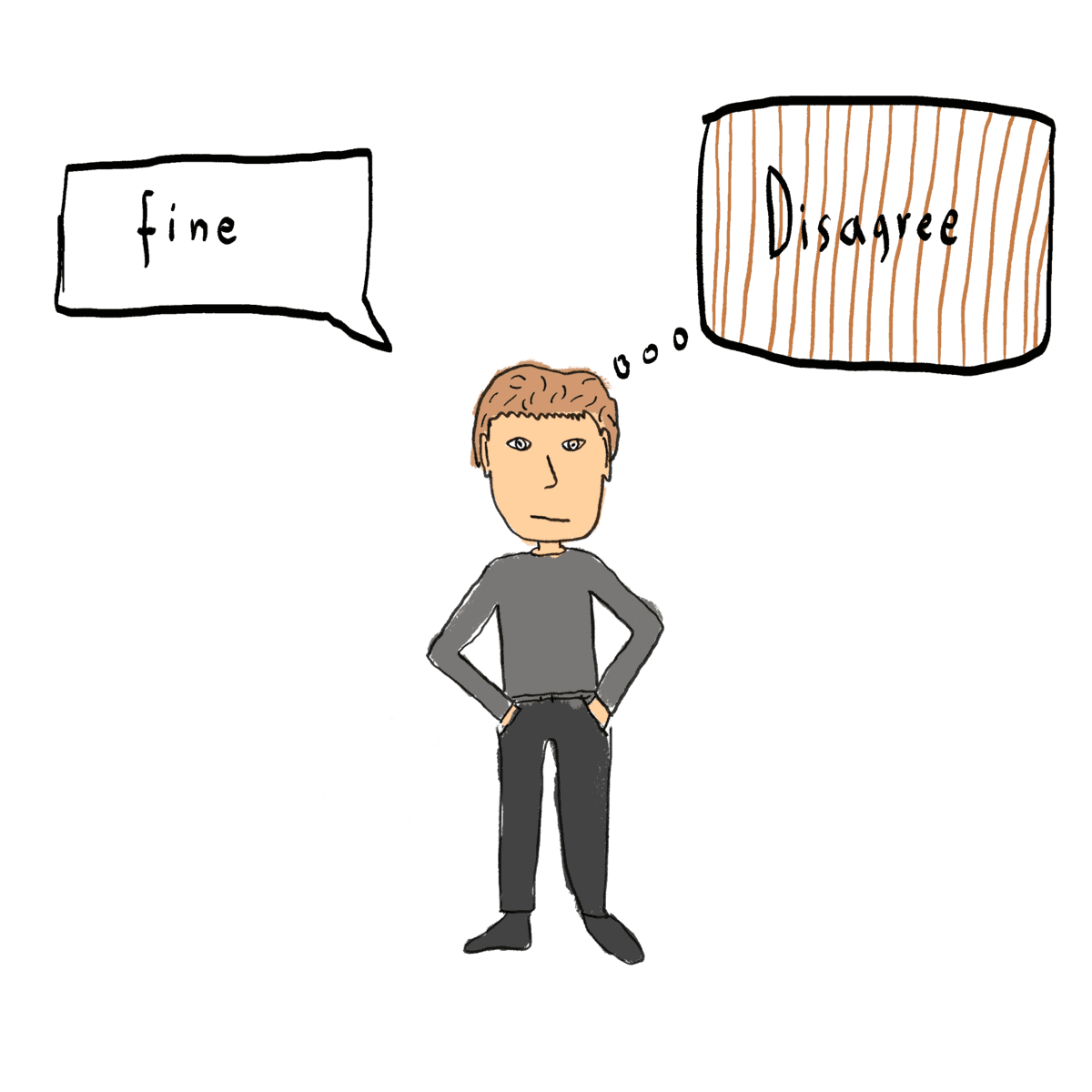
Theres a personality trait that predicts career stagnation better than almost anything else — and most designers mistake it for a virtue. Its not imposter syndrome. Its not a lack of strategic skill. Its something quieter and harder to see. This issue is about the moment I sat in a design review, knew the PM was wrong, and said "sounds good" anyway.
THE DECISIONS · 15 MAR 2026
Youve just presented a recommendation based on user interviews and heuristic analysis. The engineering lead says: "Interesting, but do you have quantitative data?" You dont — because the kind of data theyre asking for would require a six\-week experiment youll never get approved. This issue gives you the language to name the pattern and the playbook to respond.
THE PATTERNS · 08 MAR 2026
You've been at your company for two years. The work is fine. But youve started developing a story: design doesnt matter here. Your PM doesnt listen. Youve stopped trying new things because "whats the point?" This issue is about the two operating systems running underneath your career — and how to check which one you`re on.
./the-approach
Instead, you agreed to make another version. Sometimes the obstacle is a skill you have not practised. Sometimes it is a protective habit. Sometimes it is how the organisation makes decisions. The useful response depends on which one you are facing.
./method
Situation
What happened, and what decision or conversation matters?
Pattern and context
What did you do? What skills, expectations, incentives, relationships, or risks shaped that response?
Rehearsal
What could you say or do differently? Practise before the high-stakes moment.
Experiment
Try one manageable action in the actual workplace.
Review
What happened? What changed? What does the result suggest?
The field notes offer reflection and experiments to try on your own. Shaping adds facilitated rehearsal, personal feedback, repeated application and review.
I am a product design leader with a master’s in psychology, writing about the patterns that shape how designers work.
./work-with-me
ListenIn Labs is a publication and professional-development practice helping product designers build influence over the work they deliver.
FLAGSHIP · PLANNED NEXT COHORT
A six-week live cohort for product designers who want more say in the decisions behind their work. Practise on real situations, with a small group and personal feedback.
Six weeks · Four to six designers · Live online · Personal feedback · 30-day follow-up
1:1 · TWO SESSIONS
One difficult workplace situation. A clearer next move. Two one-to-one sessions that look at one situation that keeps repeating, through the lens of Acceptance and Commitment Therapy (ACT), adapted for product work. Professional development, not therapy.
Sessions of 60 and 30 minutes · Video call · Written clarity document
1:1 · ONE HOUR
CV and portfolio positioning for your next product design role. One hour on how your CV and portfolio read to someone who regularly reviews design applications. I review both beforehand, and you leave with written takeaways.
60 minutes · CV and portfolio reviewed beforehand · Written takeaways
One field note, every two weeks.
Every two weeks, I examine a familiar workplace situation, the psychological and organisational patterns behind it, and a different response to try.
Get the field notes
↗
ListenIn Labs
A psychologist’s field notes on working in tech.